Locksmith Scams in the Bay Area: How to Spot Them Before They Cost You
Locksmith scams are a persistent and documented problem across the Bay Area. San Francisco, Oakland, and San Jose all see unlicensed operators running paid search ads, listing fake local addresses, and quoting low prices that bear no resemblance to what they charge on arrival. The California Bureau of Security and Investigative Services (BSIS) — the body that licenses locksmiths in California — regularly fields complaints about bait-and-switch pricing and unlicensed work in the region.
The problem is specifically acute during lockouts, when people are under time pressure, often in an uncomfortable or unsafe situation, and not in a good position to vet whoever picks up the phone. Here's what to look for.
The '$15 Lockout' Ad
The most common scam in the Bay Area starts with a paid search ad offering a lockout for $15, $19, or some similarly implausible price. The number is a dispatch fee — not the actual charge. When the technician arrives, the price quoted on the phone is nowhere to be found. Instead, you're presented with a new quote, often several hundred dollars, and told it's because the lock is "special," the situation is "more complex," or a "service fee" was added.
At this point you're already locked out, the technician is standing in front of you, and accepting the inflated quote feels like the path of least resistance. This is by design.
What to do: Never accept a locksmith quote that doesn't include a full price — not just a dispatch fee — before anyone is dispatched. A legitimate locksmith quotes a real price for the specific service upfront. If the person on the phone won't give you a number, hang up.
Fake Local Addresses
Many scam locksmith operations list multiple fake Bay Area addresses to appear local in search results — a SoMa address for SF searches, an Uptown Oakland address for Oakland searches, a Willow Glen address for San Jose searches. The listing has a local phone number and a Google Business Profile showing a nearby address, but nobody is actually there.
The real technician is dispatched from a centralized location, often outside the Bay Area entirely, with response times that don't match what was quoted. Some operations also route calls through national call centers that add a layer between you and the actual technician.
- How to check — search the address on Google Street View. A real locksmith shop has a physical storefront. If the listed address is a parking lot, a residential address, or a virtual office building, that's a red flag.
- Ask directly — 'Is your shop physically located at [address]?' A legitimate locksmith answers this clearly.
Unlicensed Operators
California law requires locksmith businesses to hold a license from the BSIS (Bureau of Security and Investigative Services). Individual technicians must carry a registration card. Unlicensed locksmiths operate illegally, carry no insurance, and have no accountability to a regulatory body if something goes wrong — a broken door, a damaged lock cylinder, or a situation where the work creates a security problem rather than solving one.
Verifying a license takes about 90 seconds:
- Go to bsis.ca.gov and search under 'Verify a License.' Search by company name or individual name.
- Ask the technician directly — 'Can I see your locksmith registration?' A licensed technician carries their registration card and shows it without hesitation.
- Check before anyone arrives — do this while you're waiting, not when the technician is at your door.
Drilling When Picking Would Work
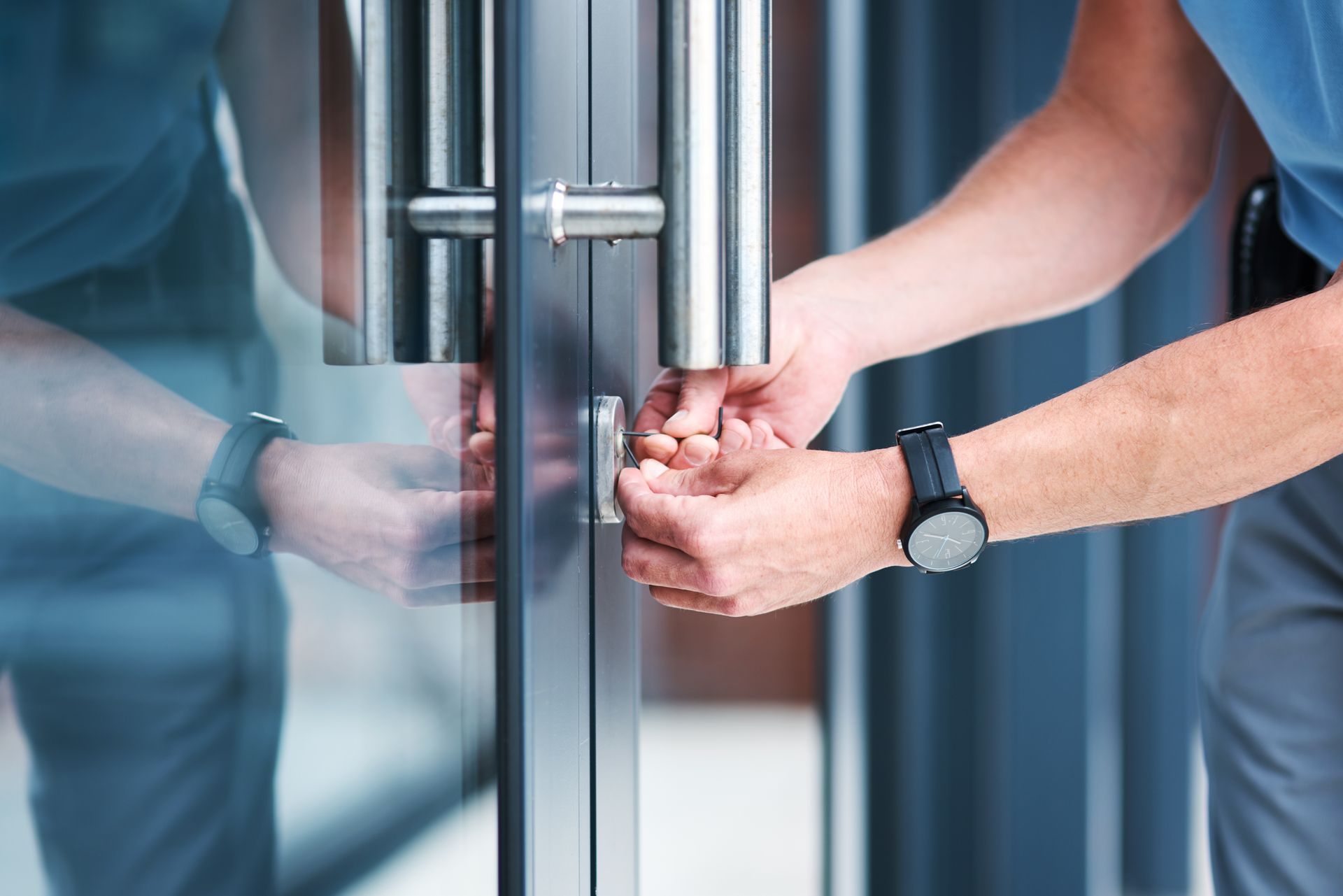
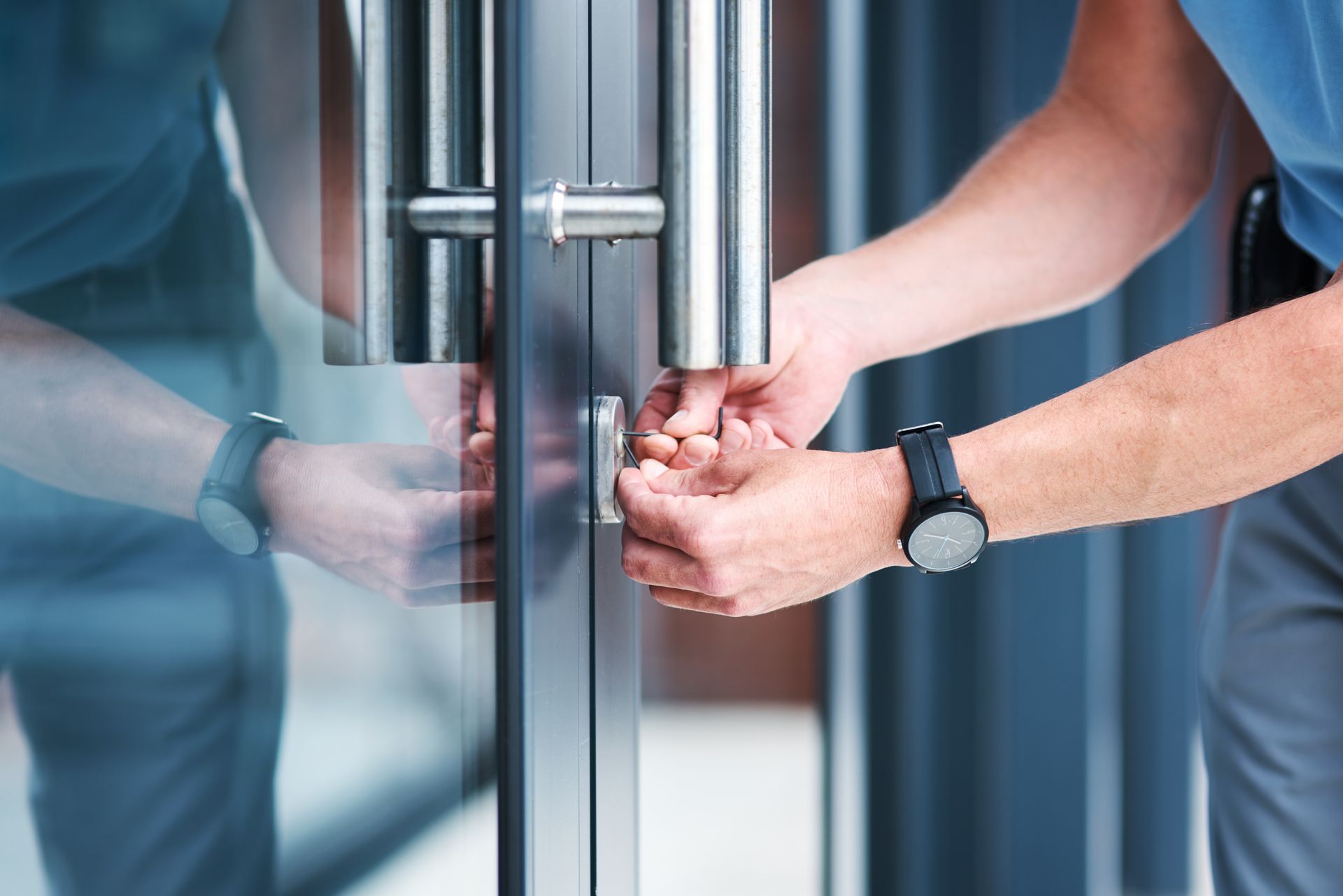
A common bait-and-switch technique involves a technician who drills a lock that could have been picked or shimmed non-destructively — then charges for both the "emergency drilling" service and a replacement lock. A skilled locksmith can open the vast majority of residential and commercial locks without drilling. Drilling should be a last resort for high-security cylinders or unusual situations, not the default response to a standard deadbolt.
If a technician immediately reaches for a drill without attempting non-destructive entry, ask why drilling is necessary for your specific lock. If the answer is vague or they become evasive, that's a signal to pause.
Vague or Verbal-Only Quotes
A legitimate locksmith provides a written or confirmed quote — including the full price for the specific service — before starting work. A verbal quote given at the door that differs from what was discussed on the phone is not binding in any meaningful sense and gives you no recourse if the final bill is different.
- Ask for written confirmation of the quoted price before the technician begins. A photo of a quote sheet or a text confirmation is sufficient.
- Never sign anything under pressure. If a technician is insisting you sign an authorization form before you've seen the full price, that's a red flag.
How to Find a Legitimate Locksmith in the Bay Area
A few simple checks separate licensed, reputable locksmiths from scam operations:
Verify the BSIS license at bsis.ca.gov before calling
Get a full price quote before dispatch — not a dispatch fee, a full service price
Confirm a real physical address — a genuine shop, not a virtual office or residential listing
Check reviews on multiple platforms — Google, Yelp, and the BBB. Look for patterns in negative reviews, particularly mentions of bait-and-switch pricing
Ask for the registration card on arrival — a licensed technician shows it immediately
For licensed, bonded, and insured locksmith services across San Jose, Oakland, and San Francisco — with a firm price before dispatch and a physical shop at 1245 The Alameda, San Jose — see our locksmith services page.
A Locksmith You Can Verify Before You Call
A-A Lock & Alarm Inc. has held locksmith licensing in California for over 60 years. Our BSIS license is verifiable, our technicians carry registration cards, and we quote a real price before anyone is dispatched. No bait-and-switch, no drilling when picking works, no surprise charges on arrival.
Call (800) 422-5625 or check us at aalock.com.