FOB Key vs. Transponder Key vs. Remote Key: What's the Difference?
Walk into any automotive locksmith or dealership with a lost car key and you'll hear these three terms used almost interchangeably. A service advisor says you need a "new fob." The locksmith quotes you for a "transponder key." Your insurance company's roadside service mentions a "remote key replacement." They're describing the same general situation — but these terms actually refer to different things, and knowing the difference matters when you're comparing quotes or deciding who to call.
Here's a clear breakdown, written for Bay Area drivers who deal with the specific key-loss scenarios common in San Francisco, Oakland, and San Jose.
What Is a Transponder Key?
A transponder key is any car key that contains a microchip embedded in the plastic head. The chip is passive — it has no battery and doesn't transmit on its own. When the key is inserted into the ignition, a coil inside the ignition barrel emits a low-frequency radio signal that powers the chip. The chip responds with a unique encrypted code. If that code matches what the car's Engine Control Unit (ECU) expects, the immobilizer deactivates and the engine starts.
The crucial detail: a transponder key that has the correct blade profile but an unprogrammed or incorrectly programmed chip will physically turn in the ignition — but the engine will not start. This is the most common source of confusion after a locksmith appointment or a failed hardware-store key copy.
Transponder keys became standard on most vehicle makes starting in the mid-1990s. If your car was manufactured after about 1998, there's a very high probability your key contains a chip. If the plastic head is thin and flat with no buttons, it's almost certainly a basic transponder key (as opposed to a fob).
Common question: Can a hardware store copy a transponder key? Yes and no. They can cut the blade profile correctly. They cannot program the chip. The resulting key will open the door (if it's a key entry vehicle) but won't start the engine.
What Is a FOB Key?
"FOB" stands for "frequency-operated button." A FOB is a remote control device that communicates wirelessly with your vehicle — and in modern vehicles, it often also contains a transponder chip (or a separate mechanical key blade) for the ignition.
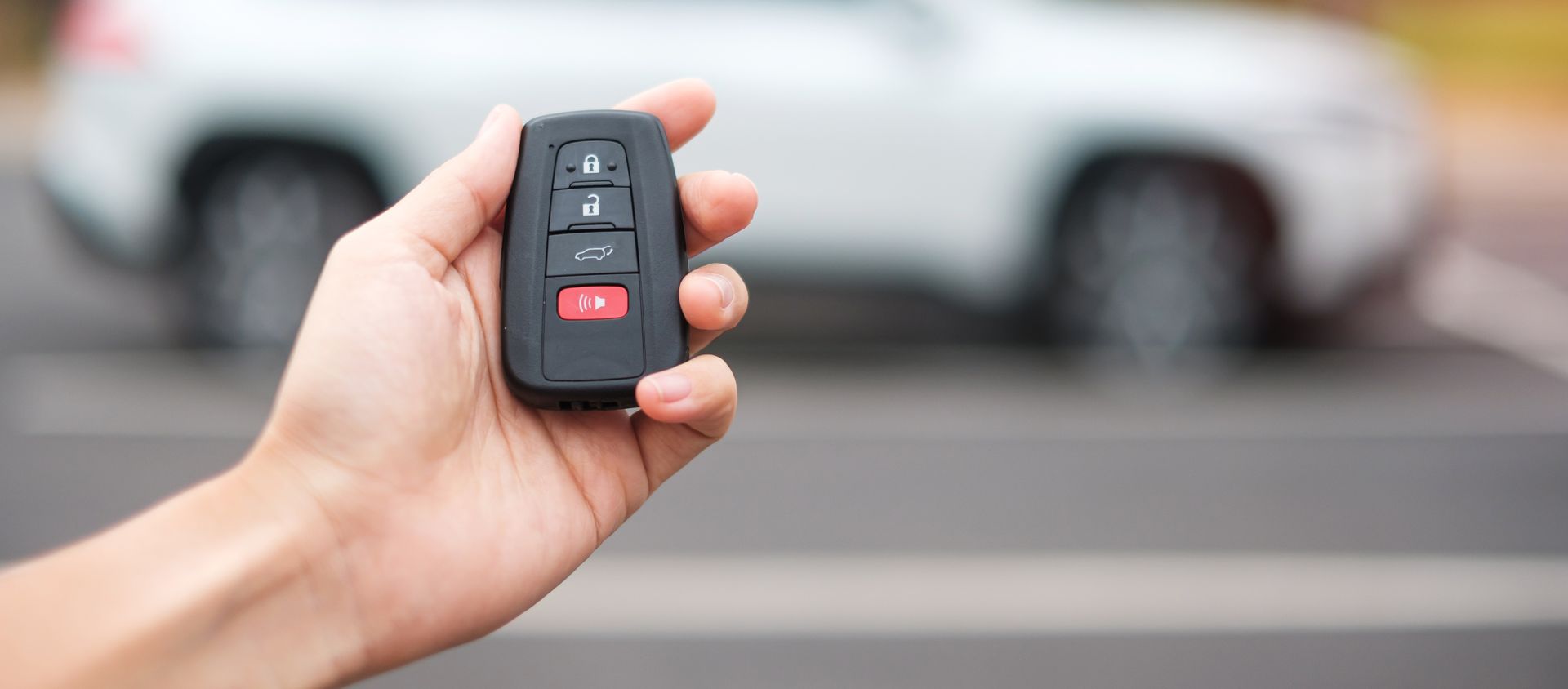
The defining feature of a FOB is the buttons: lock, unlock, trunk release, panic alarm, and on many newer vehicles, remote start. These functions operate via radio frequency transmission — distinct from the transponder chip's function, which is purely about authorizing engine start.
Modern FOBs come in several forms:
- Integrated flip key ("switchblade key") — a traditional transponder blade folds into a FOB housing. Press a button and the blade flips out. The blade starts the car; the FOB body operates the remote functions.
- Proximity FOB ("smart key" or "keyless entry key") — no blade to insert. The vehicle detects the FOB's presence via Bluetooth or RFID when you're nearby. You press a button on the door handle to unlock and a push-button on the dash to start. The FOB never leaves your pocket.
- Standalone remote FOB + separate transponder key — some older vehicles have a separate physical key for the ignition and a remote for lock/unlock functions. Losing one doesn't necessarily disable the other.
What Is a Remote Key?
"Remote key" is an informal term — the industry doesn't use it with consistent technical meaning. In practice it usually refers to any key that incorporates remote-entry functionality, making it effectively synonymous with "FOB key" or "key with remote." When a roadside assistance provider or insurance company uses this term, they mean a key that needs programming, not just blade cutting.
For practical purposes: if someone quotes you for a "remote key replacement," ask specifically whether the quote covers both the transponder chip programming and the remote frequency programming. These are sometimes priced separately.
Why Does the Distinction Matter in the Bay Area?
In San Jose, Oakland, and San Francisco, the key-loss and key-damage scenarios that drive locksmith calls have specific local characteristics that affect which service you actually need.
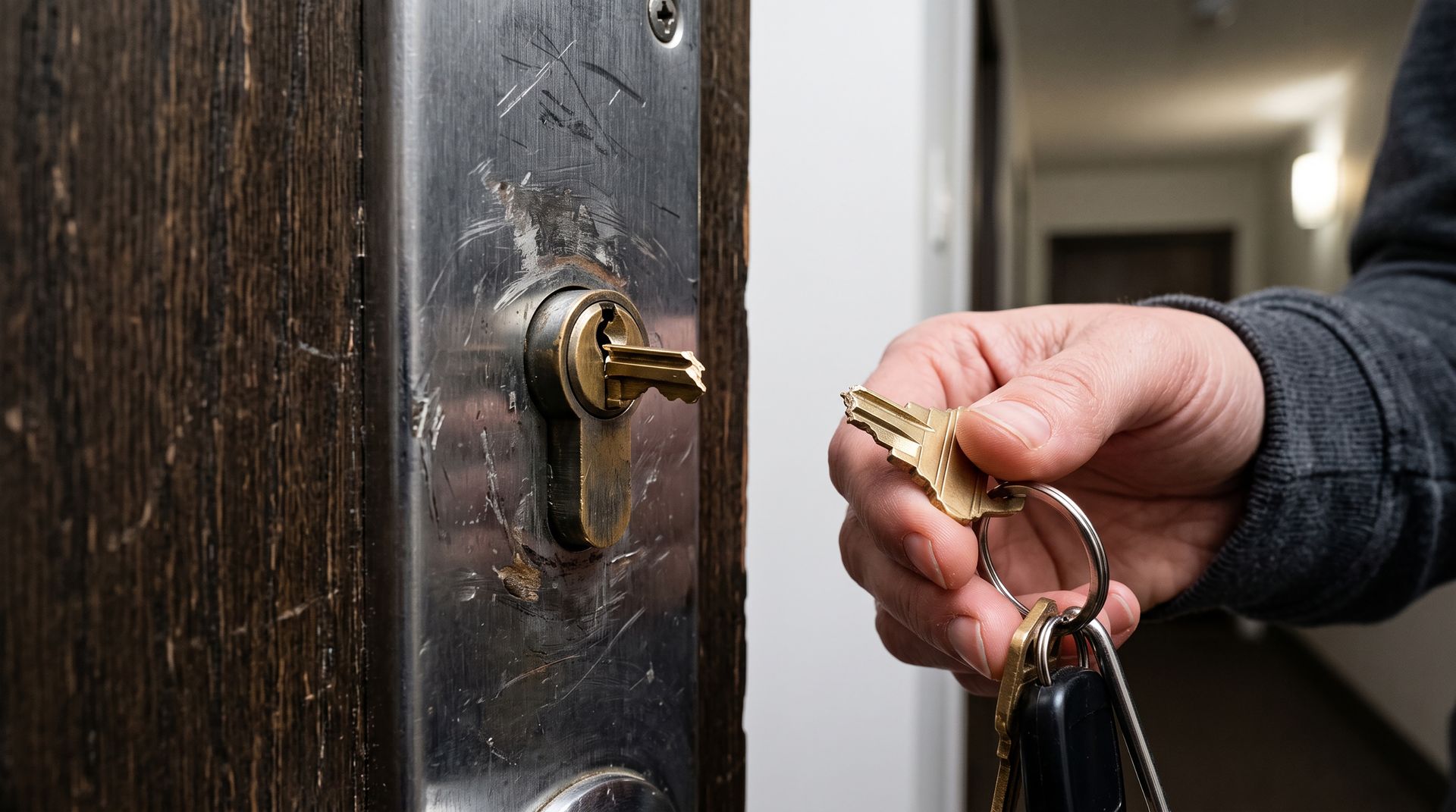
- Post-break-in in Oakland or San Francisco — if your FOB was stolen during a break-in, you need a new FOB programmed from scratch (not just cloned, since you no longer have a working original to clone from). You may also need the door lock cylinder assessed if it was forced. A transponder key replacement alone won't cover the remote entry functions.
- Lost key in a San Jose parking garage or VTA lot — if you still have one working FOB or key, cloning is faster and often cheaper than full replacement. A locksmith can copy the programming data from the working device onto a new one.
- Proximity FOB that stopped working — this is almost always a battery issue first, then a programming issue. Replace the battery before calling a locksmith. If a battery change doesn't fix it, the FOB may need to be reprogrammed to your vehicle, this is a locksmith or dealership job.
- High-mileage Silicon Valley commuter vehicles — older transponder systems (pre-2005) are simpler and cheaper to replace than modern proximity FOBs. The age and make of your vehicle significantly affects the cost.
Replacement, Cloning, and Duplication: Which Do You Need?
These three terms describe different replacement processes, and the right one depends on whether you have a working original:
- Replacement (programming from scratch) — used when the original key is lost, stolen, or destroyed. The locksmith programs a new key to your vehicle's ECU without needing an existing key to copy from. Requires diagnostic equipment and access to the OBD port.
- Cloning — used when you have at least one working key and want a spare. The programming data from the existing key is copied onto a new device. Faster and often cheaper than full replacement.
- Duplication — industry term used interchangeably with cloning. Creates an additional key with the same programming as an existing working key.
For San Jose drivers needing transponder key replacement — particularly commuters whose key stopped working or was lost — see our transponder key replacement San Jose page for service, pricing, and on-site programming across all SJ neighborhoods.
For Bay Area drivers needing FOB key replacement, cloning, or post-break-in key programming in San Francisco or Oakland, see our FOB key replacement page for mobile service, pricing, and neighborhood coverage.
Need a Car Key Replaced in the Bay Area?
A-A Lock & Alarm Inc. cuts and programs transponder keys, FOBs, and proximity keys on-site at your vehicle across San Jose, Oakland, and San Francisco. No tow required for most makes. Over 60 years serving the Bay Area.
Call
(800) 422-5625 for a quote and same-day dispatch — or contact us at
aalock.com/locksmith-shop-location.